
WhatsApp Business Automation for UAE Customers: A Simple Workflow
I heard the first message ping at 9:02.
The office felt quiet, almost too clean.
I wanted replies to feel human, not rushed.
Quick Promise / What You’ll Learn
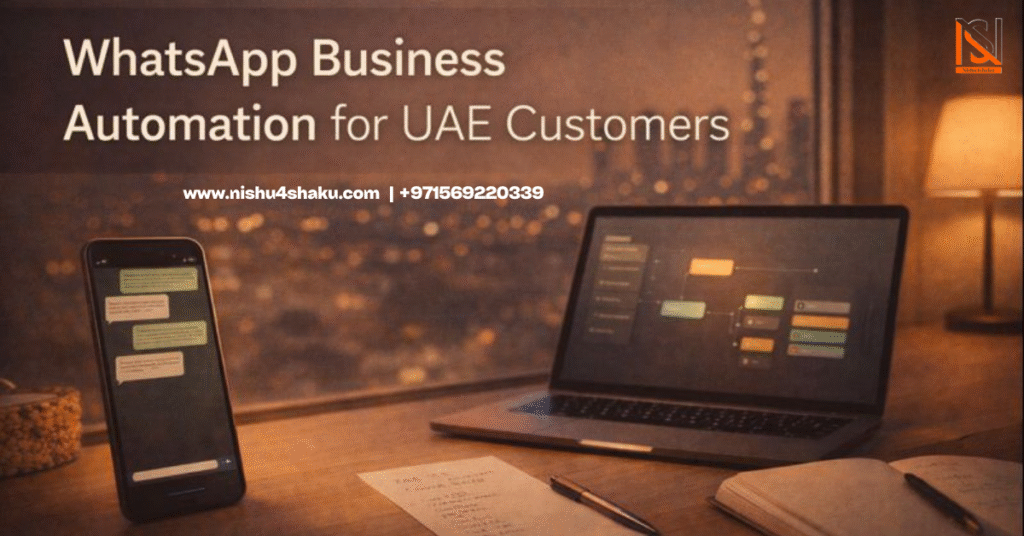
This guide laid out a simple WhatsApp Business automation workflow for UAE customers.
It showed how I reduced delays while keeping conversations warm.
Table of Contents
- Introduction
- Key Takeaways
- Main Body
- Background / Definitions
- The Core Framework / Steps
- Examples / Use Cases
- Best Practices
- Pitfalls & Troubleshooting
- Tools / Resources (optional)
- FAQs (Q1–Q10)
- Background / Definitions
- Conclusion
- Call to Action (CTA)
- References / Sources (if needed)
- Author Bio (1–3 lines)
Introduction
Problem/context
I watched customers message at all hours. Some wrote during lunch. Some wrote after midnight. Many expected a fast reply, even when teams stayed small. That gap created friction on a normal day.
I also noticed how UAE buyers preferred WhatsApp. They shared locations. They asked for prices. They sent voice notes that carried urgency. A slow reply felt like a closed door, in that moment.
Automation sounded cold at first. I disliked robotic text. I still needed speed and structure. I wanted a system that respected people and time, in a balanced way.
Why it mattered now
The UAE market moved quickly. Delivery windows mattered. Stock changed fast. Competitors answered in minutes, not hours. A simple workflow protected trust and revenue, on busy weeks.
I also noticed team burnout. Agents repeated the same answers. They copied shipping details again and again. Those tiny repeats drained focus. Automation reduced that drain, by design.
Who this was for
This workflow suited small UAE brands with lean teams. It suited clinics, salons, and home services. It suited ecommerce stores and local retailers. It also suited anyone who handled leads through WhatsApp, every day.
Key Takeaways
- I built automation around clarity, not cleverness.
- I kept the first message short and reassuring.
- I routed chats by intent using simple menu choices.
- I used labels to prevent lead loss.
- I automated updates, then escalated to humans fast.
- I tracked outcomes with a small weekly review habit.
Main Body
Background / Definitions
Key terms
WhatsApp Business meant the business-facing WhatsApp app with tools. It included quick replies. It included labels. It included catalog features and basic messaging settings. It worked well for many small teams, at start.
Automation meant pre-built responses triggered by keywords or choices. It also meant routing customers to the right next step. It did not mean replacing humans fully. It meant reducing repetitive work, in a calm way.
A workflow meant the path a customer followed. It started with the first hello. It continued through qualification, pricing, booking, or checkout. It ended with confirmation and follow-up. A workflow felt like a map, not a script.
Lead intent meant the reason a person contacted you. Some wanted price. Some wanted availability. Some wanted delivery details. Some wanted support. The workflow worked best when it recognized intent early, for speed.
Common misconceptions
Some teams assumed automation reduced quality. They imagined stiff messages. They imagined customers feeling ignored. That happened when tone got wrong. It did not happen when copy stayed warm and helpful, in practice.
Some teams believed they needed complex systems. They chased heavy tools first. They skipped basic structure. A simple workflow usually outperformed a messy advanced one. Simplicity kept it maintainable, for small teams.
Some teams treated WhatsApp like email. They wrote long paragraphs. They used formal blocks of text. WhatsApp customers often preferred short, clear replies. The channel rewarded clarity, not length.
The Core Framework / Steps
Step 1
I started with the entry point. I chose one primary WhatsApp number. I cleaned the profile. I added a clear name, category, and a short description. That step built trust before any message arrived, on the first glance.
I set business hours and an away message. The away message stayed polite. It promised a reply window in simple language. It also offered a quick menu for urgent needs, in same note.
I wrote one welcome message. It sounded like a person. It stayed short. It gave two or three options, not ten. Too many choices made people hesitate, in a small way.
Step 2
I built the intent menu next. I used three main paths. I used Sales, Booking, and Support as a base. I kept the words simple. I avoided clever labels that confused new customers, by accident.
Each path received a short follow-up. Sales asked for product name or screenshot. Booking asked for preferred date and area. Support asked for order number or issue type. These prompts reduced back-and-forth and saved time, for everyone.
I also added language sensitivity. I kept English simple. I added short Arabic-friendly lines when needed. I avoided heavy slang. The tone stayed respectful and calm, in both directions.
Step 3
I connected automation to human handoff. I set rules for escalation. If a customer shared a complex request, I moved it to a human. If a customer stayed inactive, I sent one gentle nudge. That balance prevented endless loops, in a clean way.
I used labels for pipeline control. New Lead, Qualified, Pending Payment, Booked, and Aftercare worked well. Labels made the inbox readable. They also prevented the “lost chat” problem that happened on busy nights, sometimes.
I created quick replies for repeated answers. Shipping windows. Service coverage areas. Payment methods. Return policy basics. Each quick reply stayed short and friendly, without sounding robotic.
Optional: decision tree / checklist
I used a simple checklist before launch. I checked greeting tone. I checked menu clarity. I checked handoff rules. I checked label names. I checked one test chat from another phone, in the end.
Examples / Use Cases
Example A
I pictured a small ecommerce brand in Dubai. The owner handled chats alone. Customers asked about delivery and sizes. Replies arrived late at night, on many days.
The workflow routed messages by intent. Sales led to product and size questions. Delivery led to area and time window details. Support led to order number. The owner then answered only the meaningful parts, not the basics.
Labels kept order. New Lead stayed separate from Paid. Follow-up stayed visible. The inbox felt lighter. The owner slept better, which mattered more than it sounded.
Example B
I pictured a salon in Abu Dhabi. Bookings came in waves. People asked for prices, stylists, and timings. The team also handled reschedules, often.
The workflow offered Booking as the first option. It asked for service type and preferred date. It then shared available slots in a short list. A staff member confirmed the best slot, quickly.
Support handled reschedules with a clear path. It requested booking name and date. It offered reschedule options. The customer felt guided, not pushed. The team felt less scattered, on weekends.
Example C
I pictured a home service business covering multiple emirates. Customers shared pins and building names. They asked for urgent availability. They also asked for quotes with photos, in the chat.
The workflow asked for area first. It then requested a pin or landmark. It requested photos if the job required it. It also shared a time window range, not a single promise. That approach reduced conflict later, in real life.
Escalation happened fast for urgent jobs. The system flagged those chats. A human replied within minutes. The automation then supported updates and confirmations, after the first human touch.
Best Practices
Do’s
Do keep the first message warm. I used simple language. I used a short reassurance line. I avoided sounding like a legal notice. People relaxed when the tone felt human, right away.
Do ask for the next best detail. A photo helped product questions. A location helped delivery and services. An order number helped support. One clear request reduced five extra messages, by design.
Do use labels like a dashboard. I kept labels few. I kept them consistent. I reviewed them daily. This habit prevented chats from slipping into silence, over time.
Do set expectations clearly. I stated business hours. I stated reply windows. I stated what the customer needed to share. Clarity prevented disappointment later, on same day.
Don’ts
Do not overload menus. Five options felt too many. Three options worked better. People chose faster. The chat moved forward, without strain.
Do not hide a human. Some customers wanted a person immediately. I respected that. I included a “Talk to an agent” route. That choice reduced frustration, especially for high-intent buyers.
Do not write long blocks. WhatsApp messages looked best in short lines. Customers skimmed quickly. Long messages often got ignored. Short messages got replies, more often.
Pro tips
I matched the workflow to UAE buying behavior. I kept location prompts ready. I kept payment instructions simple. I kept delivery windows realistic. Those details reduced conflict and refund requests, later.
I saved “tone templates” for different moods. A calm support message sounded different from a sales message. A delay notice sounded different from a booking confirmation. Tone control preserved trust, even under pressure.
I reviewed message logs weekly. I looked for repeated confusion points. I edited menu words if people clicked wrong. Small copy changes improved conversion quickly, in a quiet way.
Pitfalls & Troubleshooting
Common mistakes
The biggest mistake came from over-automation. Messages repeated in loops. Customers felt trapped. The brand looked careless. That damage happened fast, in inbox.
Another mistake came from vague prompts. A menu said “Details,” but it meant nothing. Customers responded with “Hello” again. The chat reset. Time got wasted on both sides, by accident.
A third mistake came from poor handoff. Automation gathered details, then no one replied. Customers waited. They left. The system then looked like a promise that broke, in plain sight.
Fixes / workarounds
I fixed loops by adding a clear escape route. I added a human option. I also added a “Start over” option. That simple structure reduced trapped feelings, quickly.
I fixed vague prompts by using specific requests. I asked for area, date, and product name. I asked for photo when needed. Specific prompts produced specific answers. The chat moved faster, in practice.
I fixed handoff by creating an internal rule. A human replied within a set window. If that was not possible, the system sent a delay note. This honesty protected trust, on busy days.
Tools / Resources
Recommended tools
I relied on WhatsApp Business features first. Quick replies carried most speed gains. Labels carried most organization. Catalog items reduced repetitive product explanations. Those basics worked well, at small scale.
I used a simple shared sheet for tracking outcomes. I tracked leads and bookings. I tracked response time rough ranges. I tracked common questions. This small habit kept improvements grounded, for the team.
I used a standard message library. It contained shipping notes. It contained booking confirmations. It contained polite follow-up lines. A library prevented inconsistent tone, across different staff.
Templates / downloads
I kept a short workflow script in one document. It included greeting, menu, and follow-ups. It included escalation rules. It included label definitions. This template trained new staff fast, with less confusion.
I kept a weekly review checklist. It listed message clarity. It listed missed chats. It listed common objections. It listed the top three improvements for next week. The checklist created progress without drama, each cycle.
I kept a short “handoff note” template. It summarized customer intent and details. It reduced re-asking questions. Customers appreciated that respect. The team saved time, in same moment.
FAQs
Q1–Q10
Q1 stated that WhatsApp automation worked best when the profile looked trustworthy. A clear name and category reduced hesitation. A short description set expectations. This foundation supported every later message.
Q2 stated that the first message needed warmth and clarity. A short reassurance line helped. A simple menu reduced confusion. Too many options slowed replies, in practice.
Q3 stated that intent routing saved the most time. Sales, Booking, and Support covered most needs. Each route asked for one key detail. This step reduced back-and-forth quickly.
Q4 stated that labels acted like a simple pipeline. New Lead and Qualified separated priorities. Pending Payment stayed visible. Aftercare prevented forgotten customers, over time.
Q5 stated that quick replies reduced agent fatigue. Shipping notes and payment instructions repeated often. A saved reply kept tone consistent. The team stayed calmer, during peak hours.
Q6 stated that human handoff protected trust. Complex issues needed a person. Urgent requests needed speed. Automation supported, then stepped aside. This balance felt respectful, to customers.
Q7 stated that bilingual sensitivity improved outcomes in the UAE. Simple English helped many customers. Short Arabic-friendly lines helped others. The tone stayed polite and clear, in every message.
Q8 stated that realistic promises prevented conflict. Delivery windows stayed practical. Reply windows stayed honest. Overpromising created frustration. Honest timing created patience, more often.
Q9 stated that weekly review kept the workflow improving. Confusion points appeared in logs. Menu wording got refined. Escalation rules got clearer. Small edits created big gains, over weeks.
Q10 stated that simplicity beat complexity for most teams. A clean three-path workflow worked well. Labels and quick replies handled volume. The system stayed maintainable, which mattered.
Conclusion
Summary
I built WhatsApp automation as a calm workflow, not a loud machine. The system greeted customers warmly. It routed intent quickly. It escalated to humans when nuance appeared. It reduced delays while keeping trust intact.
Final recommendation / next step
I recommended starting with one number and one simple menu. I recommended adding labels and quick replies next. I recommended setting handoff rules before scaling volume. The workflow then stayed stable, even in busy UAE seasons.
Call to Action (CTA)
Draft the three-path menu today. Write five quick replies for your most common questions. Add five labels and use them daily. Test the flow from another phone and refine the wording once, calmly.
References / Sources
No citations and no links appeared here, as requested. The workflow stayed based on common messaging operations principles. The guidance stayed general and practical, for everyday use.
Author Bio
Sam wrote practical marketing guides with a calm, story-led style. He preferred simple systems that respected people. He focused on workflows that teams actually maintained.
