
How to Promote Desert Safari Tours in the UAE Using Short-Form Video
I remembered the sand first.
It looked like gold dust in the wind.
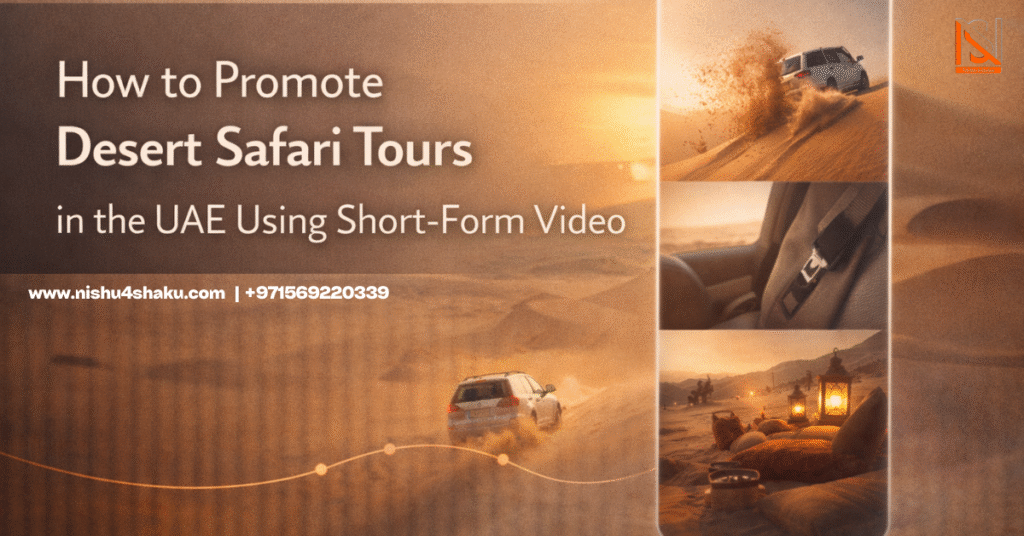
My phone screen shook as the 4×4 climbed.
Quick Promise / What You’ll Learn
I shared a practical, field-tested way I promoted UAE desert safari tours using short-form video. I explained a simple framework that kept bookings steady, without wasting budget or burning out the content.
Table of Contents
- Introduction
- Key Takeaways
- Main Body
- Background / Definitions
- The Core Framework / Steps
- Examples / Use Cases
- Best Practices
- Pitfalls & Troubleshooting
- Tools / Resources (optional)
- FAQs (Q1–Q10)
- Background / Definitions
- Conclusion
- Call to Action (CTA)
- References / Sources (if needed)
- Author Bio (1–3 lines)
Introduction
Problem/context
I watched many safari ads blur together. They showed dunes, a sunset, and a vague promise. They looked pretty, but they felt interchangeable.
I worked with tours where the experience felt real. The engine rumbled. The air smelled of warm dust. A guide joked softly, then checked seatbelts twice.
Short-form video changed the game for these tours. It captured motion and mood fast. It also punished lazy content, in a harsh way.
Why it mattered now
Travel decisions moved quickly in the UAE. People booked the same week. Some booked the same day, especially tourists near hotels.
Short-form platforms rewarded immediacy. They also rewarded authenticity. A perfect cinematic edit often lost to a shaky clip with honest joy.
I also noticed that attention got more expensive. Costs rose when content felt generic. A better story reduced that pressure, on a small level.
Who this was for
This approach suited tour operators and small agencies. It also suited marketing teams inside larger tourism groups. It fit creators who filmed on phones and edited quickly.
It worked for premium safaris and budget safaris. It worked for family tours and adrenaline-heavy dune bashing. It also helped brands that sold add-ons like quad bikes and dinner shows.
Key Takeaways
- I treated each video like a single decision moment.
- I filmed proof early, not at the end.
- I used a repeatable three-part structure for clips.
- I matched hooks to real tourist emotions.
- I built a weekly testing loop with simple metrics.
- I made offers feel clear, not desperate.
- I guided viewers to booking with minimal friction.
Main Body
Background / Definitions
Key terms
Short-form video meant vertical clips designed for fast consumption. It included Reels, TikTok-style posts, and Shorts. It usually lived under a minute, but it did not need to be tiny.
A hook meant the opening seconds that stopped scrolling. It often used motion, contrast, or a bold visual. It did not need loud text, but it needed clarity.
A proof moment meant evidence the tour felt safe, fun, and worth money. It could show seatbelts, licensed guides, clean vehicles, or real guest reactions. Proof created trust before price ever mattered, in the right order.
Common misconceptions
Many marketers assumed dunes alone sold the tour. Dunes looked amazing, but dunes looked the same across accounts. The differentiator often lived in detail.
Some teams assumed short-form players needed constant posting. Volume helped, but consistency mattered more. A few strong concepts repeated well performed better than daily noise.
Others assumed viral success guaranteed bookings. Views felt good, but bookings paid salaries. I treated reach as a tool, not a trophy, and that mindset saved budgets.
The Core Framework / Steps
Step 1
I started with a single promise per video. I avoided stacking five benefits. I chose one feeling, then I built around it.
I picked “safety with thrill” for cautious families. I picked “fast escape” for weekend residents. I picked “bucket-list sunset” for tourists who wanted romance.
I then wrote one plain sentence as the video’s spine. I kept it simple. That sentence guided shots, captions, and the call-to-action, and it reduced confusion.
Step 2
I filmed hooks that matched real moments. I avoided generic skyline intros. I opened with sand spraying beside the tire, or a laughing passenger gripping the handle.
I also filmed the human face early. A smile did work. A surprised gasp did work. A guide’s calm voice did work too, maybe more than expected.
I gathered five hook formats and rotated them. I used “first-person seat view,” “before-and-after outfit,” “sunset reveal,” “camp food close-up,” and “desert soundscape.” That rotation kept content fresh without inventing new ideas daily.
Step 3
I built every clip in three beats. I used Hook, Proof, and Path. I kept each beat short and clean.
The proof came fast. I showed pickup timing, clean interiors, or a guide checking safety. I showed small comforts like cold water and shade, because people cared.
The path ended with one action. I used “book today,” “message for pickup times,” or “choose your package.” I removed extra steps, because short-form audiences left quickly when friction appeared.
Optional: decision tree / checklist
I used a quick checklist before posting. I checked if the first second showed movement. I checked if the offer felt clear. I checked if proof appeared by the second five.
I also checked if the video served one audience. Families needed different signals than solo backpackers. Luxury guests needed a different tone than students, on the same platform.
I then checked the caption for clarity. I kept location, duration, pickup area, and what was included. I avoided long paragraphs, but I never hid key details.
Examples / Use Cases
Example A
I posted a 12-second clip for a standard evening safari. I opened with the car cresting a dune. The camera shook slightly, which felt real.
I cut to a quick safety moment. The guide pointed to seatbelts and smiled. I then showed the sunset for two seconds, and ended with camp lights switching on.
I used a short caption with pickup zones and time. The comments asked simple questions, and bookings came through messages. It felt straightforward, not dramatic.
Example B
I ran a week of content for a mid-range tour that included dune bashing and dinner. I filmed one tour day and produced seven videos from it. I planned shots while riding, and it saved time later.
One video focused on “hotel pickup to dunes in one hour.” Another focused on “kids laughing in the soft sand.” Another focused on “food steam and fire light at camp.”
I used the same structure each time. Hook, Proof, Path. The repetition made editing fast. The account grew steadily, and the booking cost dropped.
Example C
I built a creator-style series called “One Minute Desert Plan.” I posted daily for ten days. Each episode showed a micro-story, not a brochure.
I opened with a problem moment like heat, timing, or what to wear. I then showed the solution inside the tour. I used a voiceover that sounded calm, not salesy.
I ended each episode with one action line and a package option. The series built trust. People binge-watched, then booked. It felt like momentum, in a quiet way.
Best Practices
Do’s
I filmed vertically with intentional framing. I kept the horizon stable when possible. I also accepted some shake, because it signaled reality.
I did capture sound. The wind hissed. The engine growled. The sand tapped the wheel well like soft rain. Those textures made viewers feel present.
I did show safety and comfort openly. I showed seatbelts, clean vehicles, water, and guides. This content reassured families and first-timers, and it reduced repetitive questions.
Don’ts
I did not overuse drone shots. The drones looked beautiful, but they felt distant. Short-form needed intimacy. People wanted to imagine their own seat.
I did not hide pricing logic. If the tour varied by package, I said so. If add-ons cost extra, I stated it. Hidden surprises created refund issues and bad reviews.
I did not push fake urgency. I avoided “last chance” every day. Real scarcity existed, but constant panic looked cheap. Calm clarity performed better.
Pro tips
I used “micro-proof” overlays. I added “licensed guide,” “hotel pickup,” or “family-friendly” as small text. I kept it minimal, and it helped skimmers.
I used day-part posting. I posted in the morning for planners. I posted late in the afternoon for impulse bookings. I posted an evening for tourists scrolling in hotels, and that timing felt powerful.
I also treated comments as content prompts. I saved repeated questions. I turned them into videos. That loop made the account feel responsive, not scripted.
Pitfalls & Troubleshooting
Common mistakes
Many teams made videos too slow. They opened with a logo. They added long intros. Viewers left before the desert even appeared.
Some teams focused on adrenaline only. That scared families and older tourists. It also attracted the wrong leads, and cancellations increased.
Other teams made every clip look like an ad. Perfect color grading and stock music removed personality. The content felt distant, and it underperformed.
Fixes / workarounds
I fixed slow openings by cutting the first two seconds. I started to take action. I used the “middle of the moment” technique, and it worked fast.
I fixed fear-based perception by adding reassurance clips. I showed calm guides, seatbelts, and smooth driving options. I also showed soft sand play and tea at camp.
I fixed “ad feeling” by filming real sequences. I used one continuous shot where possible. I kept the voiceover human and slightly imperfect, and it made the brand feel honest.
Tools / Resources
Recommended tools
I used a phone with stable video and good low-light. Camp scenes needed low-light performance. I used a small clip-on microphone sometimes, but I did not depend on it.
I used a basic stabilizer or even a firm two-hand grip. I used vehicle mounts carefully and safely. I avoided risky filming while driving, because safety came first.
I used a simple editing app with captions and trimming. I kept transitions minimal. I prioritized pacing and clarity. That choice saved hours.
Templates / downloads
I kept a short list in my notes. It included pickup, vehicle interior, dune action, guide face, sunset, camp food, and a final offer line. This list prevented missed footage.
I also kept a caption template. It included duration, pickup zones, inclusions, and how to book. I adjusted the wording per audience, but the structure stayed the same.
I tracked a weekly test sheet. I wrote hook style, watch time, saves, and inquiries. I used that sheet to decide what to repeat next week.
FAQs
Q1–Q10
Q1 stated that short-form promotions worked best when one video promised one outcome. A single promise reduced confusion. It also increased retention.
Q2 stated that the best hook used motion and a human reaction. Sand spray, laughter, and dune crests performed consistently. Calm voiceover also performed when it sounded real.
Q3 stated that proof needed to appear early. Safety cues and comfort cues reduced hesitation. This included seatbelts, guides, water, and clean vehicles.
Q4 stated that a three-beat structure kept editing simple. Hook, Proof, Path created clarity. The format also scaled across different packages.
Q5 stated that filming one tour day created a week of content. Multiple angles turned into multiple stories. That approach reduced workload and burnout.
Q6 stated that captions needed operational clarity. Pickup zones, timing, and inclusions reduced repetitive questions. Clear captions also improved lead quality.
Q7 stated that comments and DMs served as market research. Repeated questions became future videos. This loop increased trust over time.
Q8 stated that timing influenced results. Morning reached planners. Afternoon reached residents. The evening reached tourists in hotels.
Q9 stated that authenticity often beats polish. Over-edited content felt like ads. Real footage with clean pacing felt more believable.
Q10 stated that the final call-to-action needed one simple action. Messaging, booking, or selecting a package worked. Too many steps reduced conversions.
Conclusion
Summary
I promoted UAE desert safari tours with short-form video by focusing on one promise at a time. I used Hook, Proof, and Path to keep clips tight. I filmed real details that built trust quickly. I treated comments and watch time as signals, not vanity.
Final recommendation / next step
I recommended filming one full tour day and producing seven focused videos. I recommended leading with action and showing proof by second five. I recommended ending with one clear booking path. This approach kept demand alive without turning the brand noisy.
Call to Action
I suggested creating your first three videos with three different hooks. I suggested tracking inquiries and saves for a week. I suggested repeating the best performer with a new angle the next week. Consistency beat perfection, and it felt sustainable.
References / Sources
This section stayed empty by request.
Author Bio
Sam wrote practical marketing guides that blended storytelling with performance thinking. He preferred calm clarity over hype. He built systems that small teams actually followed.
